Relationship Mapping: Navigating Your Strategic Opportunities
The Power of Visual Data
The Waze of Business
Mapping the Terrain
Sponsored by
For as long as I can remember, I've been fascinated by flight. As such, I'm in awe of airplane pilots' skills. They can navigate complex airspaces, manage multiple systems, and make split-second decisions that can mean the difference between a secure flight and a catastrophe. This skill set requires rigorous training, relentless focus, and deep knowledge of the environment they're operating in.
In many ways, business leaders are the pilots of their organizations, guiding their teams through the turbulent skies of a dynamic market. And just like pilots, they need a robust navigation system to help them make informed decisions and reach their destinations safely and efficiently.
That's where the concept of a Strategic Relationship Map comes in. Much like an aviation map, a well-crafted strategic relationship map provides a detailed, real-time view of the complex web of internal and external stakeholders, influencers, and decision-makers, and more importantly, the depth, health, and relevance of each, that often shape the trajectory of a business.
A strategic relationship map illustrates the key players in a given business context, whether that's a target account, a partner ecosystem, or an entire industry. By plotting out these relationships in a clear, accessible format, leaders gain a powerful tool for understanding the terrain and charting the best course forward.
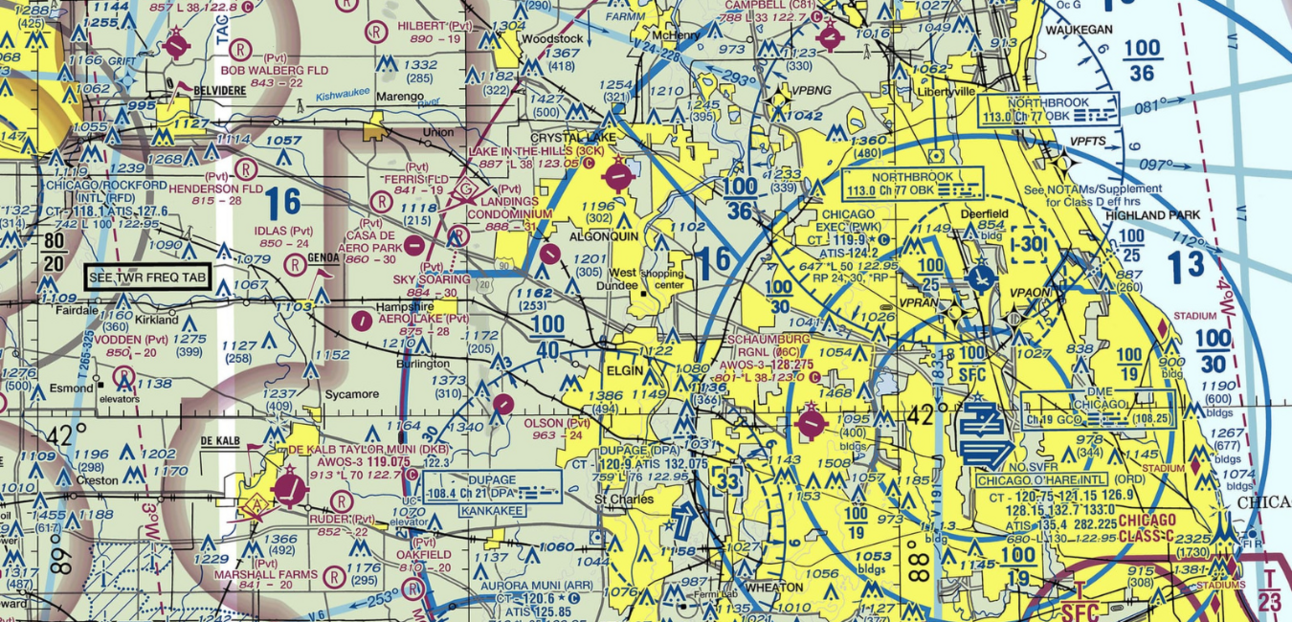
Think about the density of information contained in a standard FAA aviation map. You have detailed diagrams of airports, geographical features, airspace boundaries, and navigational waypoints—all layered together in a way that a trained pilot can interpret at a glance.
Now, imagine having a similar wealth of insight about a key account you're trying to penetrate. Detailed org charts, stakeholder profiles, past interactions, and strategic priorities all integrated into a dynamic, searchable interface. What if this strategic relationship map went beyond serving as a descriptive tool to one prescriptive? Similar to how a pilot understands the approach to a new airport or how to avoid certain terrains, what if relationally, business leaders and their teams also fundamentally understood the dynamics they're walking into within a highly visible internal corporate initiative or a promising prospective customer site?
In our daily lives, we've grown accustomed to the convenience and precision of navigation apps like Waze. Even in a city we know well, Waze provides real-time insights that make our journeys more efficient and less stressful. It alerts us to accidents, road closures, and faster alternate routes, allowing us to adapt on the fly.
That's the level of dynamic, actionable insight that a next-generation strategic relationship map should aspire to deliver. Rather than a static snapshot, it should be a living, breathing tool that pulls in data from multiple sources to provide a continuously updated view of the relationship ecosystem within the context of a highly relevant and focused outcome.
This is the vision behind Avnir's forthcoming Relationship Map tool. By integrating multiple data sources from individual and team relationships, whether that data resides in a CRM system, email exchanges, social media activity, or other touchpoints, Avnir Relationship Map aims to provide sales teams with a Waze-like interface for navigating their most important relationships.
Consider for a minute why some sales team successfully navigate their way from an initial introduction or an awareness campaign all the way to a multi-million dollar sale within often a very complex account. Sure, many leaders will attribute the success to the masterful navigation and nurturing skills of an account executive, his or her support team, and the regional leaders that brought that success to fruition. What if those masterful ingredients of skills, knowledge, and capabilities were available to a broader team of professionals?
You see, maps are highly specialized tools designed to convey critical information quickly and clearly. In aviation, the Terminal Procedure Publication (TPP), for instance, provides detailed diagrams of each airport, including adjacent geographical features, runways, and navigational waypoints.
Imagine having a similar guide for each of your key accounts—a comprehensive dossier outlining the unique purchasing processes, legal considerations, digital infrastructure, and decision-making hierarchies. With this level of granular insight, sales teams could tailor their approach to the specific nuances of each account, identifying the path of least resistance and avoiding common pitfalls.
Another critical component of aviation maps is the use of waypoints—specific locations that pilots use to chart their course and communicate their progress. In the context of account mapping, waypoints might represent key influencers or decision-makers that a sales team needs to engage en route towards a transformative relationship with material and lasting impact on the organization.
Related reading: Avnir Updates From 2024 AI Tools for Intelligent Relationship Management in B2B Sales Which business relationships should you focus on? the AVNIR platform