Last month, we talked about the pause. February is about seeing the gap differently — and taking one concrete step that moves your firm from guessing to knowing.
Hey there,
Last month, we talked about "the pause." That quiet, uncomfortable moment when you realize something needs to change, and you also know you've been putting it off. For many of you, that pause was about relationships.
A lot of you replied. Some with a simple "this hit." Others with a longer version of the same feeling. It's clear this isn't an isolated issue; it's a pattern.
So we want to continue the conversation, not restart it.
What Usually Happens After the Pause
Here's what we've seen happen over and over with firms like yours. The realization that your relationship management is fragmented and leaking revenue is real. The intention to fix it is genuine.
And then the calendar fills back up.
Client work takes priority. A new proposal lands. An internal fire needs putting out. Nothing dramatic happens. No single crisis. No catastrophic failure. Just the slow, steady pull of momentum, dragging you back into the familiar patterns you know aren't working.
This isn't a discipline problem. It's not a motivation problem. It's what happens when a critical insight doesn't have a system to land in. You're left with good intentions that become February regrets.
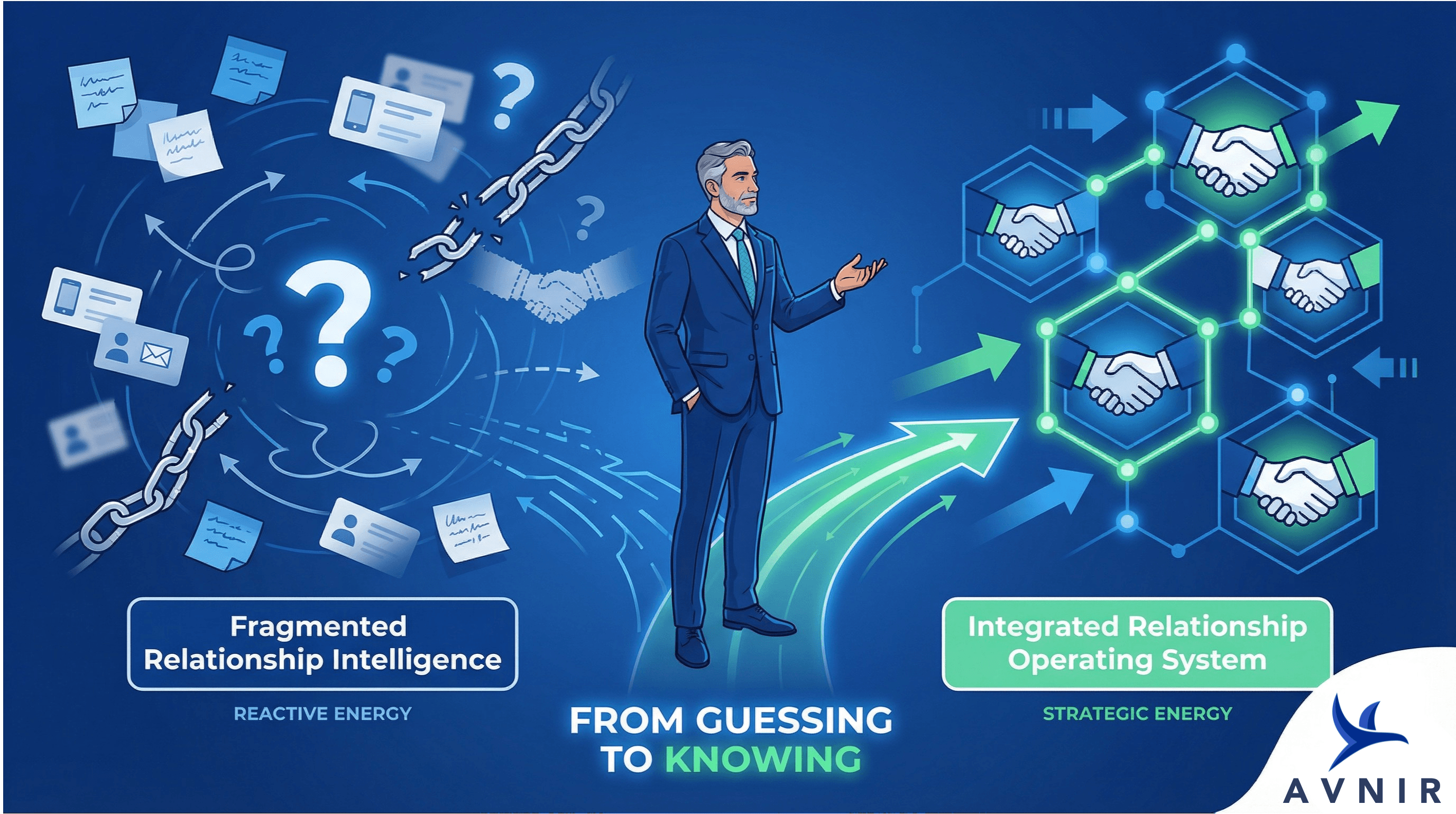
Most consulting firm founders are still managing relationships the way they did ten years ago — manually, inconsistently, and reactively. You're expecting your firm to scale in a complex market, but your most critical asset — your network — is being managed with spreadsheets, disconnected contact lists, and the institutional memory of a few key partners.
It's like trying to run a modern financial firm with a paper ledger.
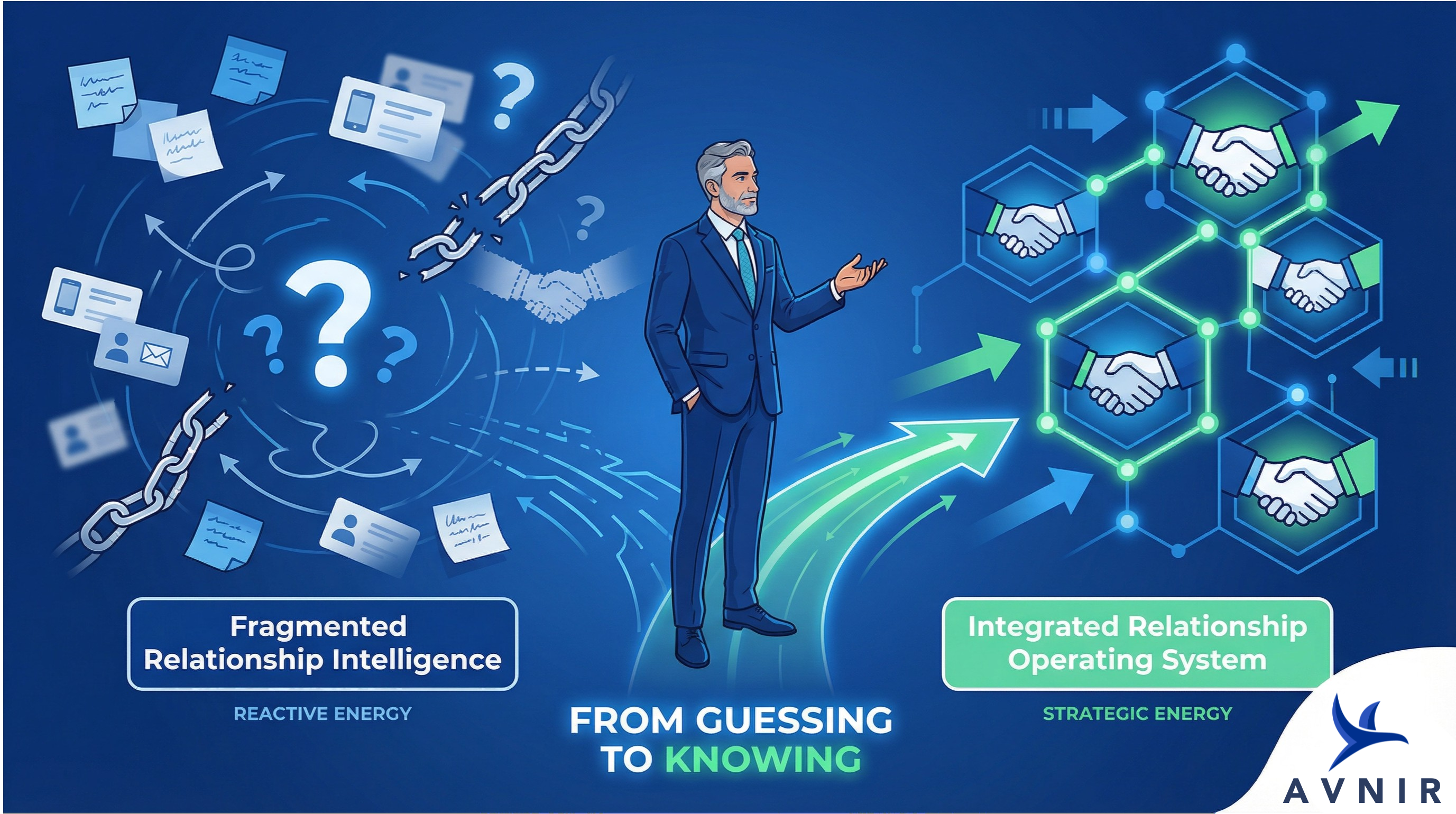
This fragmented intelligence means you're constantly guessing. Who knows the new CFO at that target account? Did we have a champion at the company that just went cold? Was there a warm path into the deal we just lost to a competitor who seemed to come out of nowhere?
Your leaders are consumed by delivery, and your growth plans require adding more headcount instead of creating more leverage from the network you already have. This is the quiet drag on your growth — the invisible friction that keeps you from reaching the next level.
One Small Way Forward
Instead of asking, "How do we fix our entire relationship strategy?" — a question so big it invites procrastination — try asking a smaller, more focused question this week.
Take ten quiet minutes. No spreadsheets, no CRM reports. Just a blank page.
Write down the names of your top 20 strategic relationships. Not just clients. Think past clients, partners, industry influencers, mentors — the people who could fundamentally change your firm's trajectory.
Next to each name, answer three simple questions honestly:
- When was our last meaningful, non-transactional conversation?
- What is the single most important thing happening in their world right now?
- What is one thing we could do in the next 30 days to help them, with no expectation of return?
This isn't an action plan. It's a diagnostic. It's about moving from guessing to knowing.
The goal is not to create more work, but to bring intention to the work that matters. The clarity that comes from this simple exercise is often the first step toward real change. It makes the abstract problem of "relationship management" feel concrete and solvable.
Where This Goes Next: Reinventing Relationships
January was about noticing the gap. February is about seeing it differently.
That's what our next session is designed for. It's not a webinar about networking hacks or sales tricks. It's a strategic conversation about building a new operating system for your firm's relationships.
We're moving from the awareness of the problem to the architecture of the solution. We'll introduce practical frameworks for transformation, including:
- Individual Relationship Plans (IRPs): How to create a simple, repeatable plan for your most critical connections.
- Dormant Relationship Reactivation: A system for identifying and warming up high-potential contacts you've lost touch with.
- Strengthening Your Top 20: How to move from reactive check-ins to proactive value creation with the people who matter most.
This is about moving from hoping the right person on your team speaks up at the right time, to knowing where the warm paths into your most important accounts already exist. It's about turning your firm's collective network from a liability into your most powerful, defensible asset.
If you're tired of the pause and ready for a plan, this conversation is for you.
LinkedIn Live · February 17, 2026 · 1 PM EST
Relationships Reinvented
Stop managing relationships the old way. A 60-minute working session for firm leaders ready to move from knowing they have a relationship problem to finally doing something about it.
Register for "Relationships Reinvented" →
What We're Building
We're building the system we've always wished existed: a way to make your firm's collective relationship intelligence visible, shared, and actionable. We are in the early stages and are being selective about our first wave of partners.
If you're curious to see what we're building at AVNIR and feel it might be helpful for your firm, you can request a spot in our early access program. No pressure, just context.
Early Access
See What We're Building
Relationship intelligence as infrastructure — not another tool to manage.
As always, thanks for reading. Now go out and start maximizing your most valuable relationships.
— Nour + the AVNIR Team
P.S. — If the ten-minute exercise of mapping your top 20 relationships feels daunting, that's data. It's a sign that your most valuable assets are not as visible as they need to be. Our session on the 17th is designed to give you the tools to change that.
Related reading: The First Signal: Your Calendar Is Full, But Your Pipeline Is Unpredictable · The Question That Started This · How secure is AI-powered CRM data? · the AVNIR platform